How Often Should You Stain a Deck in Georgia?
How Georgia sun and humidity wear down deck finishes, the signs it's time to restain, how to prep, and how stain, sealer and paint compare.
Many wood decks in Georgia typically need a fresh coat of stain or sealer about every couple of years, but the real answer depends on the product you use and how much sun, shade and foot traffic your deck gets. Instead of going strictly by the calendar, watch the wood: when water stops beading up, the color fades or the boards start turning gray, it's time.
Why Georgia Is Hard on Deck Finishes
A deck finish has two jobs: keep water out of the wood and slow down sun damage. Georgia makes both jobs harder.
- Summer sun. Ultraviolet light breaks down the surface of the wood and the finish on top of it. That's what turns unprotected wood gray and makes stain fade. South- and west-facing decks tend to wear fastest.
- Humidity and storms. Warm, humid air and frequent afternoon storms mean boards spend a lot of time damp. Once a finish wears thin, the wood soaks up water, swells, dries out and eventually cracks.
- Pine pollen and leaves. Each spring, pollen coats everything. Mixed with rain, it holds moisture on the surface and feeds mildew, especially on shaded decks.
- Red clay. Rain splashes clay onto lower boards, stairs and posts, staining the wood and holding moisture against it.
Horizontal surfaces take the most punishment. The deck floor usually needs attention well before the railings do.
Signs Your Deck Is Ready for a New Coat
Water no longer beads
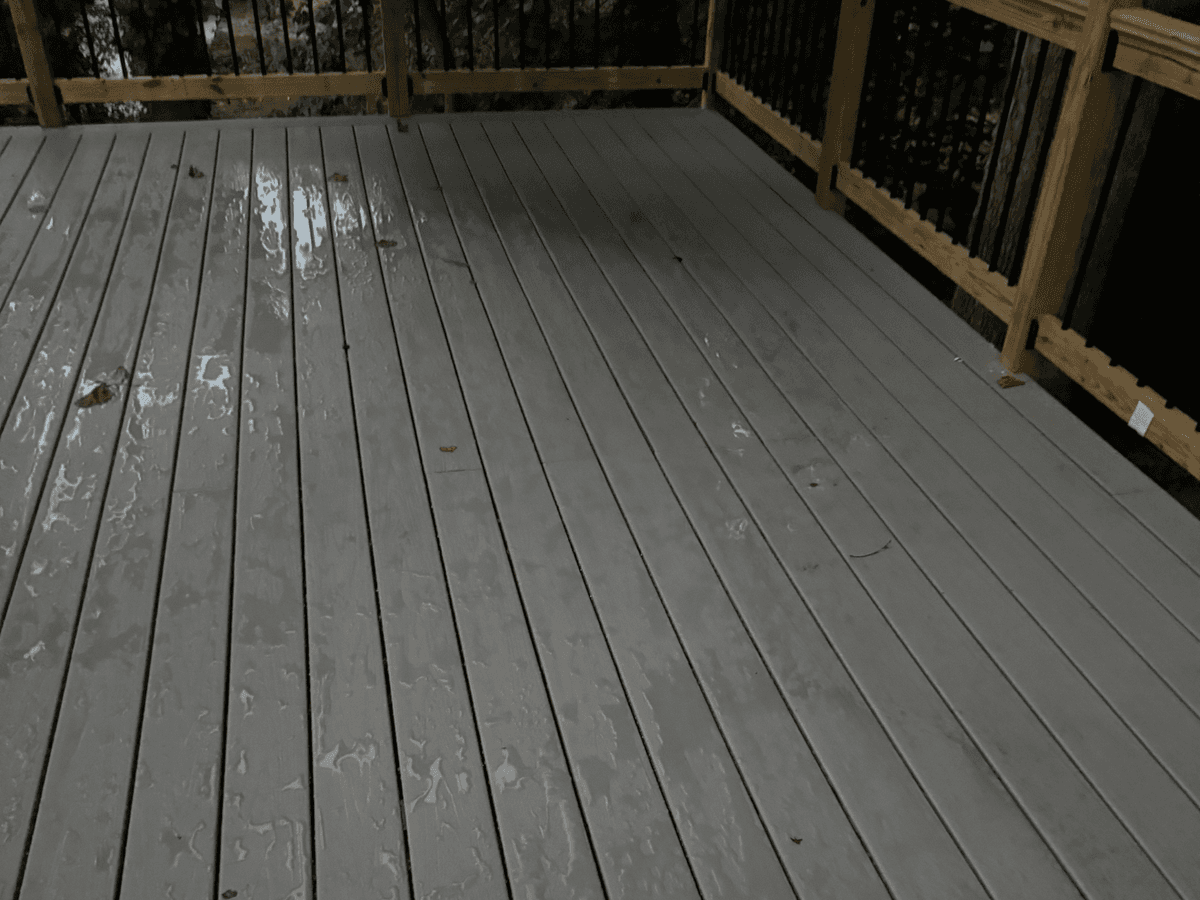
Sprinkle some water on the deck boards. If it beads up and sits on the surface, the finish is still working. If it darkens the wood and soaks in within a few minutes, the wood is unprotected and ready for a new coat.
Graying
Silver-gray wood is a sign of sun damage at the surface. A light gray cast usually cleans up with the right prep, while deeply weathered wood may need more work before it will take stain evenly.
Faded or uneven color
When walkways and sunny areas look noticeably lighter than protected spots, like under a table or along the house, the finish is wearing through.
Peeling or flaking
This shows up with solid stains and paint, which form a film on the surface. Peeling usually means moisture got underneath. Loose material has to come off before you recoat.
Mildew, splinters and cracks
Dark spots, green or black growth, rough splintery boards and small cracks along the grain all point to wood that needs cleaning and protection. If you find soft spots while you're looking, have them checked before refinishing. Our deck repair page covers rotted boards and other problems.
Stain vs. Sealer vs. Paint
The finish you choose has as much to do with how often you'll recoat as the weather does. Treat the timing below as typical patterns rather than rules, and always follow the label on the product you use.
Clear sealer
Clear sealers and water repellents keep water out and let the natural wood show. They offer little protection from the sun, so the wood still grays over time, and they usually need recoating more often than stains, often once a year on a deck in full sun.
Semi-transparent stain
This is a popular choice for Georgia deck floors. It soaks into the wood, shows the grain and adds pigment that helps block UV. It wears away gradually instead of peeling, which makes recoating simpler. On deck floors, a fresh coat every couple of years is typical, with railings often lasting longer.
Solid stain
Solid stain hides the grain and gives you a uniform color, which helps on older or mismatched wood. It can last longer between coats, especially on railings and other vertical surfaces, but it forms more of a film and can peel on deck floors, which means more prep when it's time to redo it.
Paint
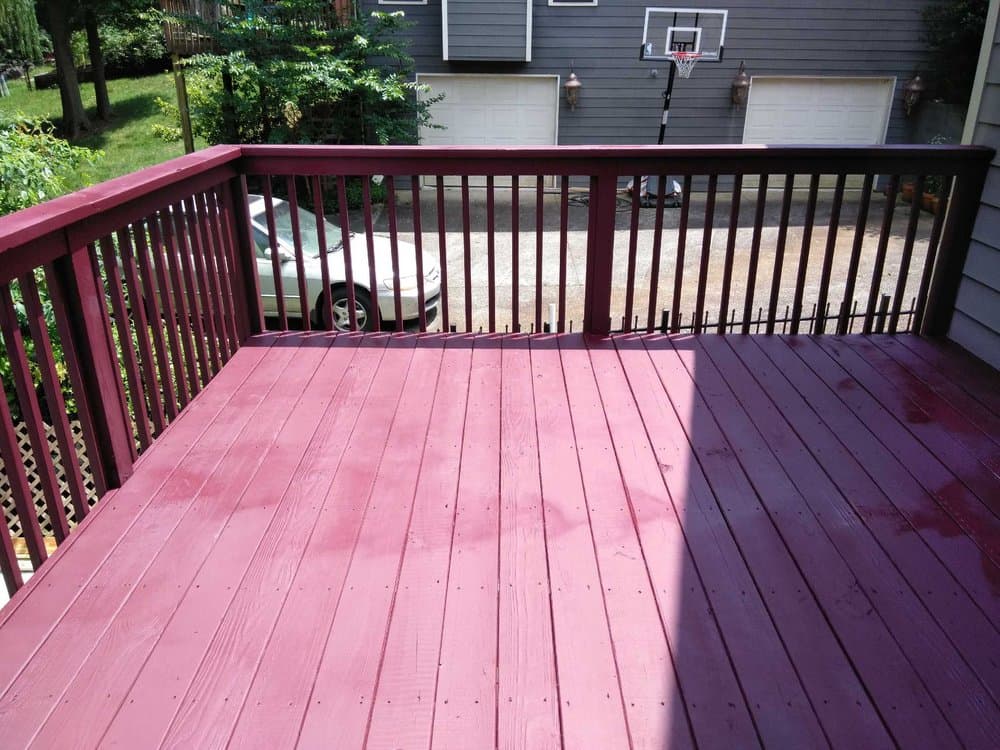
Paint gives you the widest range of colors and a crisp, finished look. It holds up well on railings, balusters, skirting and trim, and it can work on deck floors with a product made for decks and careful prep. Expect to touch up high-traffic areas. Our deck painting page has more detail.
One rule of thumb: moving from a penetrating finish to a heavier one is easy. Going back usually means stripping, so think it through before you switch to solid stain or paint.
So How Often Should You Stain?
For most Georgia decks finished with a semi-transparent stain, every couple of years is a reasonable starting point. Adjust from there:
- Plan to recoat sooner if your deck sits in full afternoon sun or sees heavy foot traffic.
- You may go longer if the deck is shaded or covered, though shaded decks need regular cleaning to keep mildew down.
- Don't wait for damage. Recoating while the old finish is still partly intact takes far less prep than rescuing gray, splintered wood.
How to Prep a Deck for Stain
Good prep is what makes a finish last. Most of the work happens before the stain can is ever opened.
- Inspect and repair. Replace soft or cracked boards, reset popped nails or screws, and tighten loose railings before you finish anything.
- Clean. Use a deck cleaner made for your wood and finish to remove dirt, pollen, mildew and graying. If you use a pressure washer, keep the pressure low and the tip moving, because too much pressure gouges and roughens the wood.
- Strip if needed. Peeling film from an old solid stain or sealer should come off so the new coat can bond.
- Brighten. Many stain makers recommend a wood brightener after cleaning or stripping to restore the wood's color and help the stain absorb evenly.
- Let it dry. Wood has to be dry before stain goes on, and in Georgia humidity that can take longer than you expect. Follow the product's guidance.
- Sand rough spots. A light sanding takes care of raised grain and splinters.
- Protect the surroundings. Cover plants, siding and anything else you don't want stained.
- Apply in good conditions. Pick a mild, dry stretch with no rain in the forecast, avoid direct midday sun, and apply thin, even coats a few boards at a time to prevent lap marks.
New pressure-treated lumber is a special case. It often needs time to dry out before it will accept stain, so check the stain manufacturer's guidance before finishing a brand-new wood deck.
Tired of Restaining?
If you'd rather spend weekends on your deck than working on it, composite may be worth a look. Composite decking from Trex and TimberTech doesn't need staining or sealing, just regular cleaning.
Get a Free Deck Staining Quote
Valen Properties provides deck staining and sealing and deck painting across Metro Atlanta, along with the repairs that get a deck ready for a new finish. We were founded in 2014, we're based in Lithia Springs, we're BBB A+ rated, and our labor is backed by a lifetime warranty. Request your free quote and tell us about your deck.