Composite vs. Wood Decks: Which Holds Up Better in Georgia?
An honest look at pressure-treated pine and composite decking in Georgia, comparing cost, upkeep, heat, moisture, insects, lifespan and looks.
Composite decking generally holds up better in Georgia with less work, because it resists rot, insects and splintering and never needs staining. Pressure-treated pine costs less upfront and can last a long time too, but only if you keep up with cleaning and sealing. The right choice comes down to your budget, how much maintenance you want, and how much sun your deck gets.
What Georgia Throws at a Deck
Before comparing materials, it helps to know what they're up against. Summers here are long, hot and humid. Afternoon storms soak the boards, then the sun bakes them. Spring brings a thick coat of yellow pine pollen that holds moisture and feeds mildew. Shaded decks under trees can stay damp for days, red clay splashes up onto lower boards and posts, and termites are active across the state.
Every deck material handles these conditions a little differently.
The Two Main Options
Pressure-treated pine
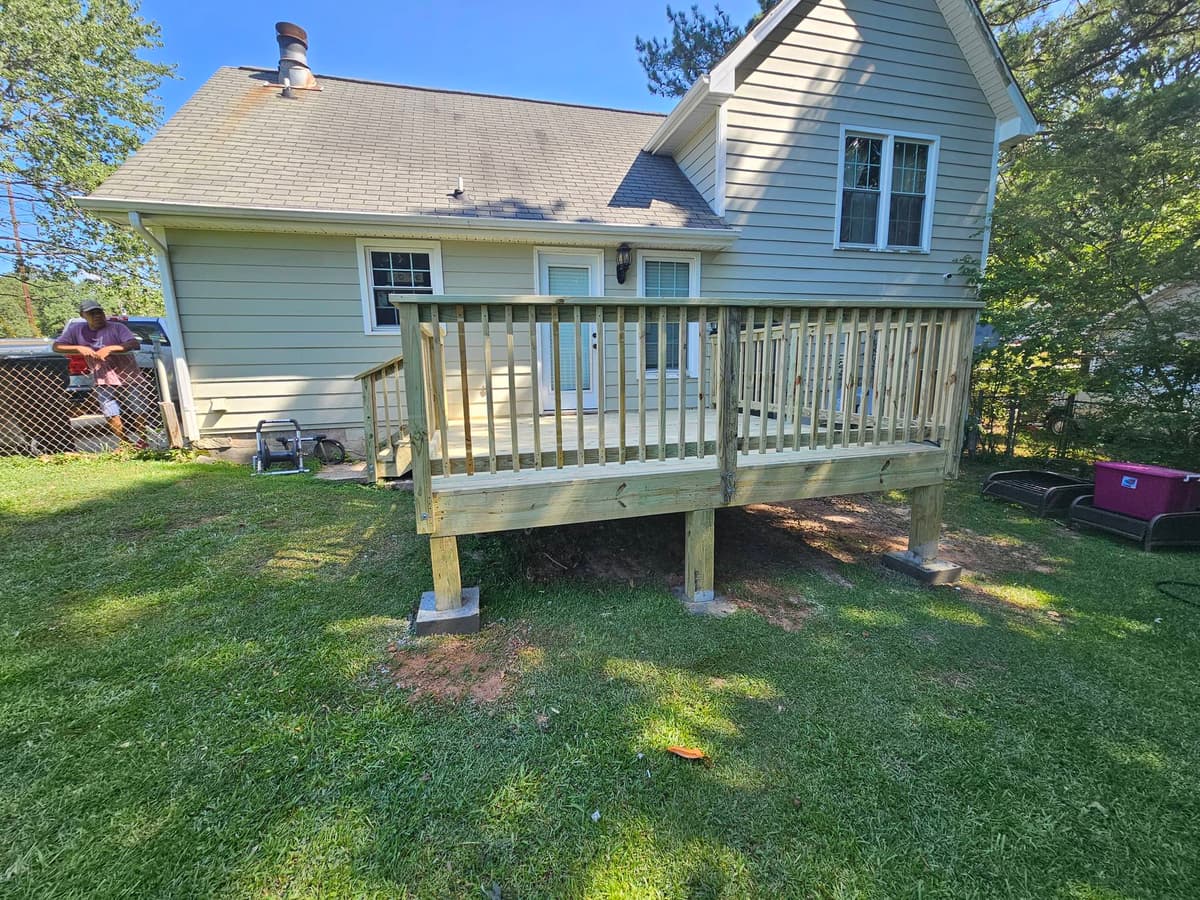
Pressure-treated southern yellow pine is the familiar choice for wood decks across the Southeast. It is treated with preservatives that help it resist rot and insects, and it can be stained or painted in nearly any color.
Composite decking
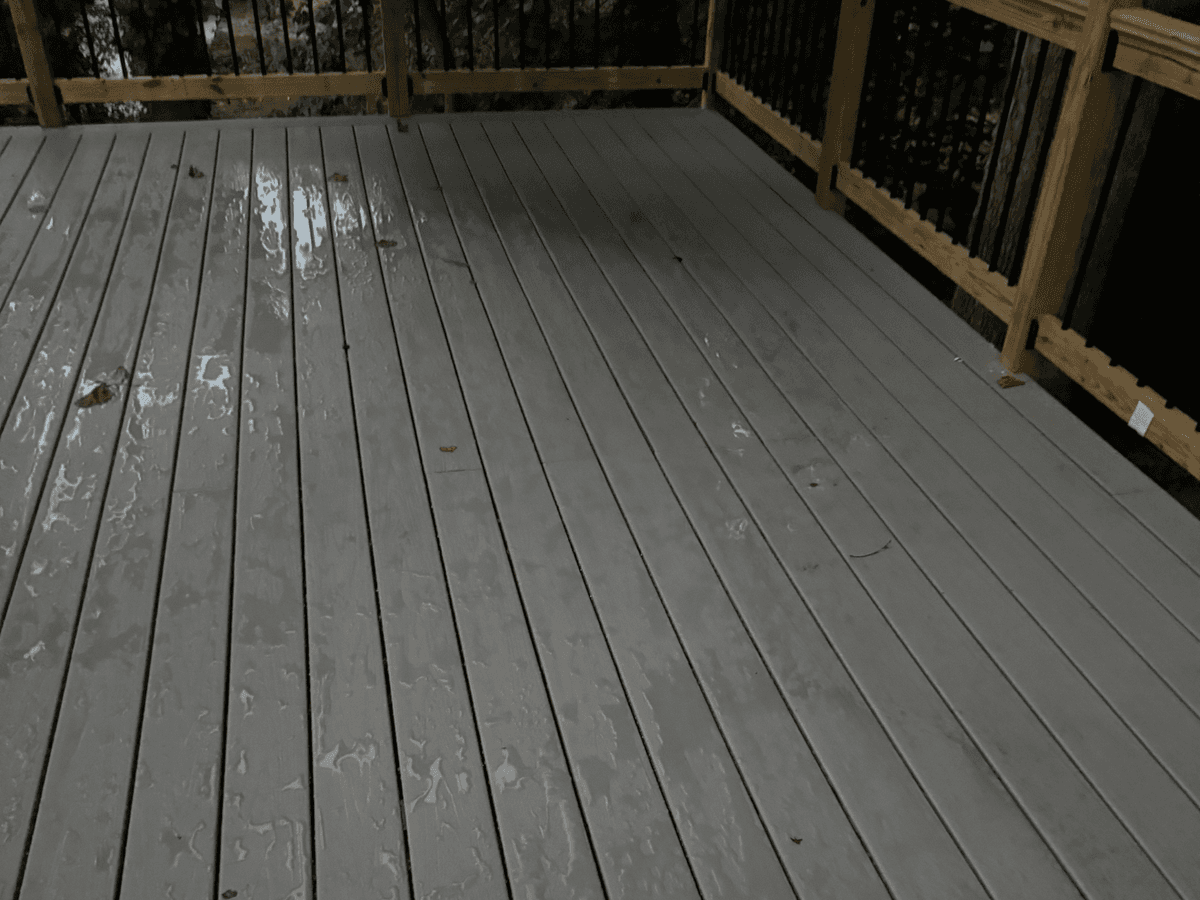
Composite boards are made from a blend of wood fibers and plastic. Many modern products, including lines from Trex and TimberTech, have a protective outer shell, often called a cap, that guards against stains, fading and moisture.
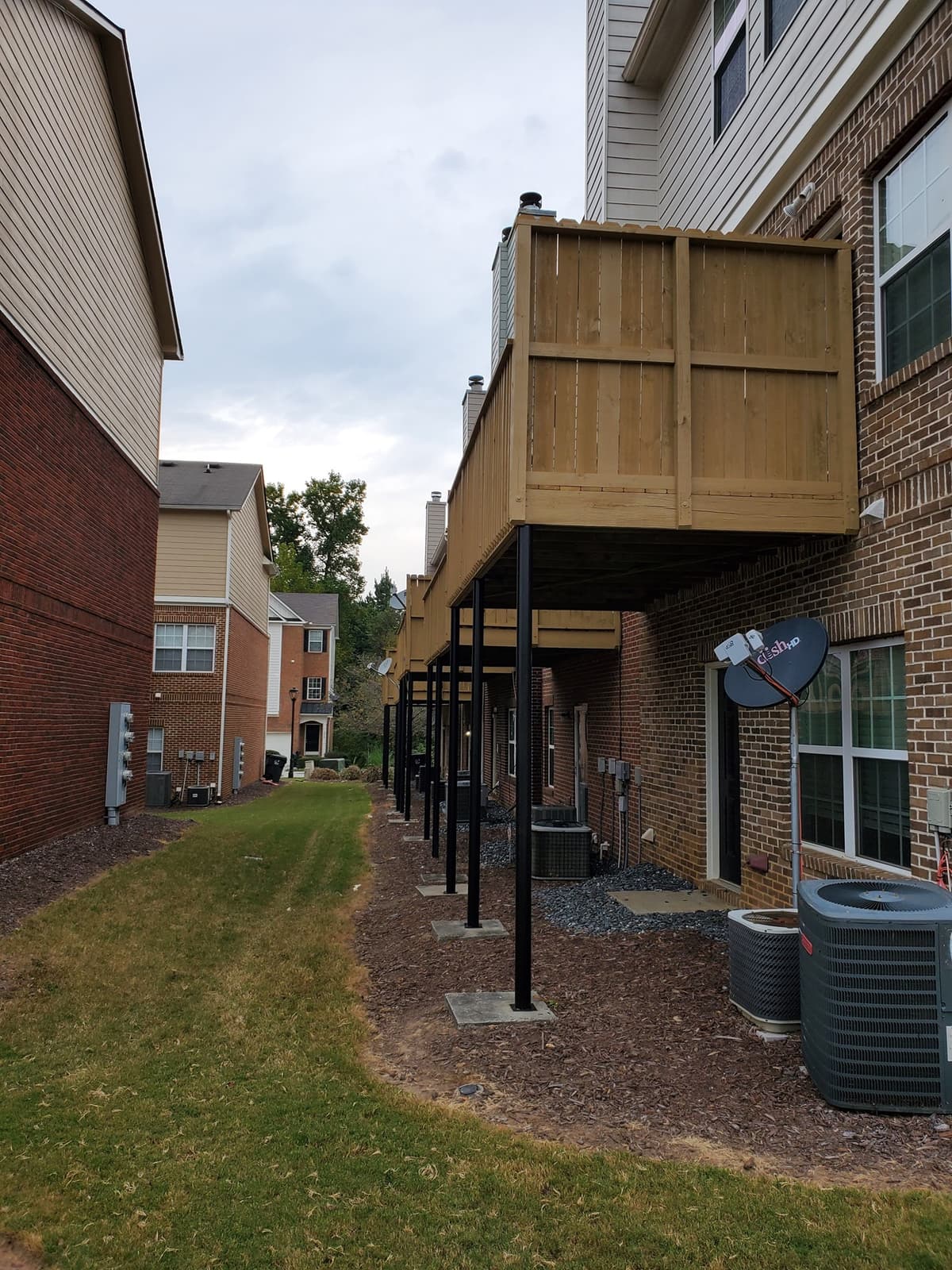
One detail surprises a lot of homeowners: a composite deck usually still sits on a pressure-treated wood frame. The boards you walk on are composite, but the posts, beams and joists underneath are typically treated lumber. That matters for long-term durability, and we'll come back to it.
Upfront Cost
Wood wins. Pressure-treated pine is the lower-cost material to build with. Composite boards cost more, and the hidden fasteners and trim pieces many composite decks use add to the total.
The fair comparison looks beyond day one, though. A wood deck comes with ongoing maintenance, either your time and supplies or a professional's, for as long as you own it. Composite moves more of the cost to the start. If the upfront number is the sticking point, deck financing through Acorn Finance can help spread it out.
Maintenance
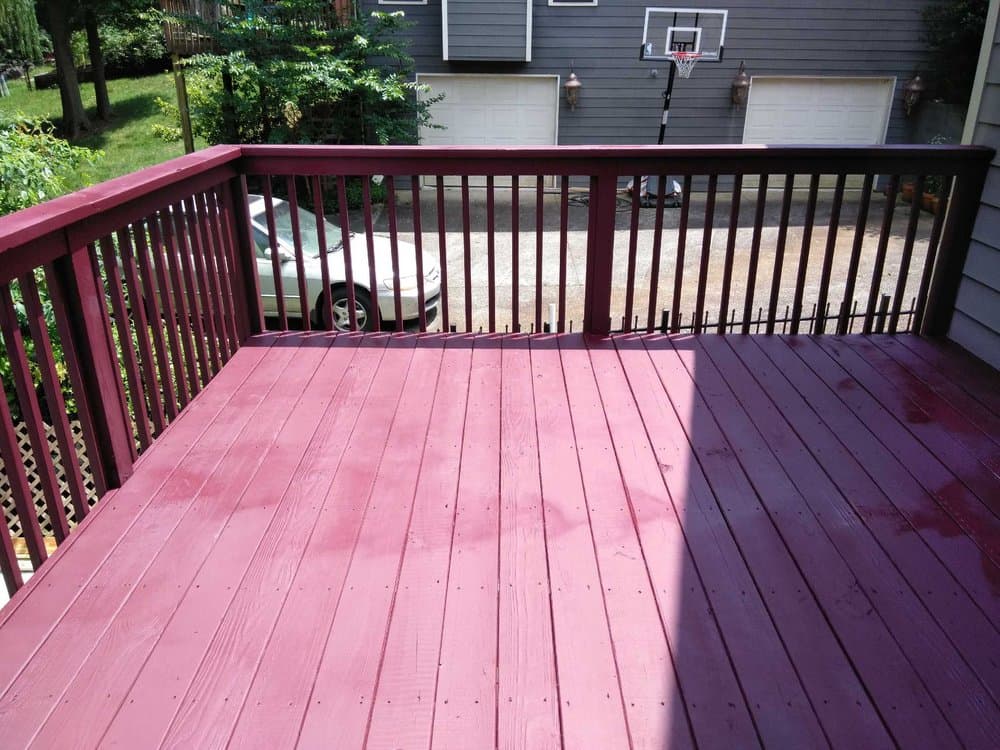
Composite wins. A wood deck in Georgia needs regular cleaning and a fresh coat of stain or sealer from time to time to keep water out and keep the color from fading to gray. Skip it, and boards dry out, check (crack along the grain), split and splinter. If you go with wood, our deck staining and sealing service can take that chore off your list.
Composite doesn't need staining, sealing or sanding. It does need cleaning. Pollen, leaves and dirt left on any deck can lead to mildew, especially in the shade. A regular wash with soap, water and a soft brush handles most of it.
Heat in the Georgia Sun
Wood usually has the edge. On a sunny July afternoon, any deck gets warm, but many composite boards hold more heat than wood, especially darker colors. That matters for bare feet if you have kids, pets or a pool nearby.
A few things help. Lighter colors run cooler than dark ones, and some newer composite lines are designed to stay cooler in the sun. If your deck faces south or west with no shade, look at samples outdoors on a sunny day before you choose. Shade from trees, a pergola or an umbrella makes a big difference with either material.
Moisture, Mold and Mildew
Composite has the edge, with a caveat. Pressure-treated pine resists rot, but it still absorbs water. Repeated wet and dry cycles in our humid climate are what lead to warping, cupping and cracking, and damp, shaded wood is prone to mildew and, over time, decay. Cut ends and the spots where boards rest on joists are the usual trouble areas.
Capped composite boards absorb very little water, so they don't rot, warp or split the way wood can. They are not mold-proof, though. Mildew can grow on dirt and pollen sitting on the surface. The fix is a good cleaning, not a refinish.
Either way, the frame underneath is wood. Good drainage, proper board spacing and protecting the tops of the joists all help the structure last.
Termites and Other Insects
Composite boards have the edge. Composite decking resists termites and wood-boring insects. Pressure-treated lumber is treated to resist them as well, which helps a lot, but untreated cut ends and wood that stays in contact with damp soil are more vulnerable.
Because both kinds of deck typically rest on a wood frame, keeping posts off the soil, keeping mulch and dirt away from the wood, and watching for mud tubes on posts matter no matter which boards you pick.
Lifespan
Composite generally lasts longer with less effort. A well-built, well-maintained wood deck can serve you for many years. The catch is the word maintained. Wood that goes without care in Georgia's sun and humidity wears out much faster.
Composite boards are made to hold up for a long time with little more than cleaning, and manufacturers back their products with their own warranties, so read the terms for the specific line you're considering. With either material, the framing, footings and fasteners underneath decide how long the deck as a whole will last.
Look and Feel
This one is personal. Wood has real grain and a natural feel underfoot, and you can stain it almost any shade, then change the color years later. Left unfinished, it weathers to silver-gray.
Composite comes in a range of colors and wood-grain textures, and its color stays more consistent over time. Some people love the clean, uniform look; others prefer the character of real wood. Seeing full-size boards side by side is the best way to decide.
Don't Forget the Railings
Your railing doesn't have to match your decking material. Metal railings, such as those from Fortress, pair well with both wood and composite decks and need very little upkeep. Our stairs and railings page covers the options.
So Which Should You Choose?
- Choose pressure-treated pine if keeping the upfront cost down is the priority, you like the look of real wood, and you're comfortable with regular cleaning and staining.
- Choose composite if you want the least maintenance, plan to stay in your home for years, and want boards that resist rot, splinters and insects. Learn more on our composite decks page.
There's no wrong answer, only the one that fits how you use your deck and how much time you want to spend on it.
Get a Free Quote on Your New Deck
Valen Properties builds both wood and composite decks across Metro Atlanta, using Trex and TimberTech decking and Fortress railings. We were founded in 2014, we're based in Lithia Springs, we're BBB A+ rated, and our labor is backed by a lifetime warranty. Request your free quote and we'll help you compare both options for your home.